

How Can We Help You Engage In The Climate Emergency?

-
![Subscribe to our newsletter]()
Connect Newsletter
Subscribe to our weekly newsletter to learn about what climate action is being taken at City Council and in our community.
-
![Logo for the Groening Sacred Spaces London Chapter with green text and a small leaf design.]()
Greening Sacred Spaces
Offering educational and practical solutions for all faith communities to engage in greening initiatives.
-
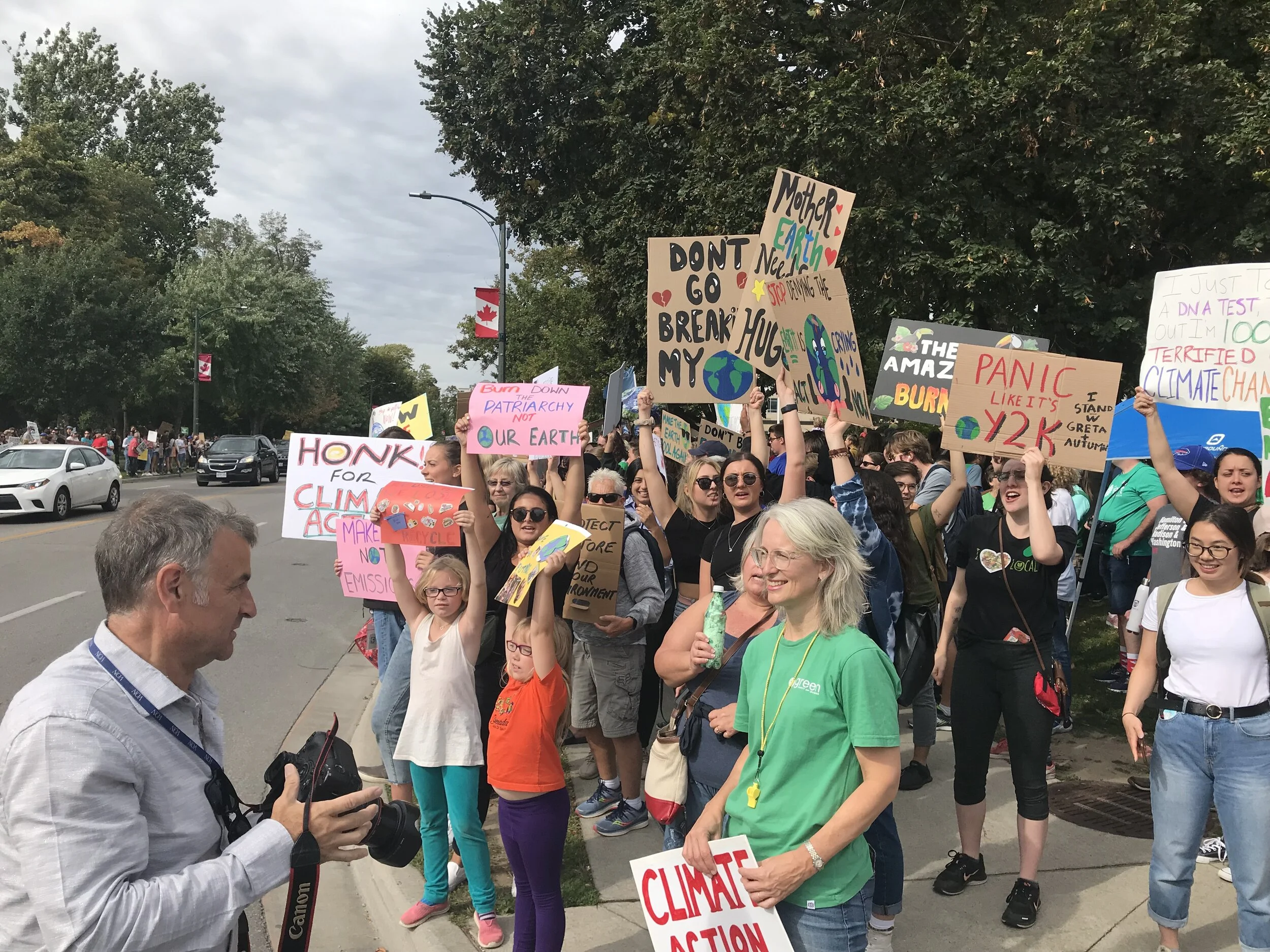
![Crowd of people protesting outdoors holding various signs and banners about climate change, with trees and cloudy sky in the background.]()
The Power of One
See how you can make a difference! Your actions whether big or small have the potential to make change! We don't need everyone to be perfect
-
![Urban scene with tall buildings and a red crossed-out symbol over the city, indicating no growth or development, next to large green text saying "STOP SPRAWL London" on a green background.]()
Stop Sprawl London
Learn more about the harms of Urban Sprawl and why London needs to grow in a different way.
-
![Colorful chalk writing and drawings on a concrete sidewalk that read 'The earth is what we all have in common' with a globe drawing nearby.]()
Systems Change
Let's change the big things so the easiest less expensive choices are the green choices. Learn more.
-
![Logo for the London Sustainability Summit featuring stylized buildings, trees, and leaves with the text 'London Sustainability Summit'.]()
London Sustainability Summit
Learn more about London coming together for an equitable, inclusive & properous future
-
![Green background with a white outline map of the world and the words 'READY FOR FUTURE' curving above it and 'London' at the bottom.]()
Fridays For Future
Learn More about our weekly FFF Strike inspired by Greta. Additional rallies are listed here.
-
![A sunset sky with dark clouds and orange hues, with a digital graphic overlay featuring a photograph of a man with white hair and text that reads 'Ford Government Record on the Climate & Environment'.]()
Ford Gov Climate Record
A review of the many climate and environmental failures of the Ford government.
-
![A multi-story white building with multiple balconies and large windows, surrounded by lush green trees and landscaping under a partly cloudy sky.]()
Green Development Standards
Is it time for London to have green development standards?
Learn about their benefits, what other communities are doing, and much more.










The National Climate League Standings 2022 are out! Check out how London compares to other cities.

Land Acknowledgement
We acknowledge that we live, work and play on the traditional lands of the Anishnasbeg who are the Chippewas of the Thames First Nation; and the Neutral or Attawandron First Nation who were a tribal confederation of Iroquoian peoples until about the 1650s. The largest group identified as the Chonnonton. And to the First Nations that settled here in the 1800s: The Oneida First Nation of the Thames, also known as Haudenosaunee, made this area their home in 1840 as part of the Six Nations Iroquois Confederacy; and The Nalahii Lunaapewaak known as the Munsee-Delaware- First Nation.
We have deep appreciation for the care these people have taken of this land and for all the living and non-living beings that dwell here. We appreciate the deep-seated knowledge these peoples have always been willing to share even though we, as settlers, may not have always been willing to listen. May our discussions, reflections and actions draw us closer in reconciliation for past actions.